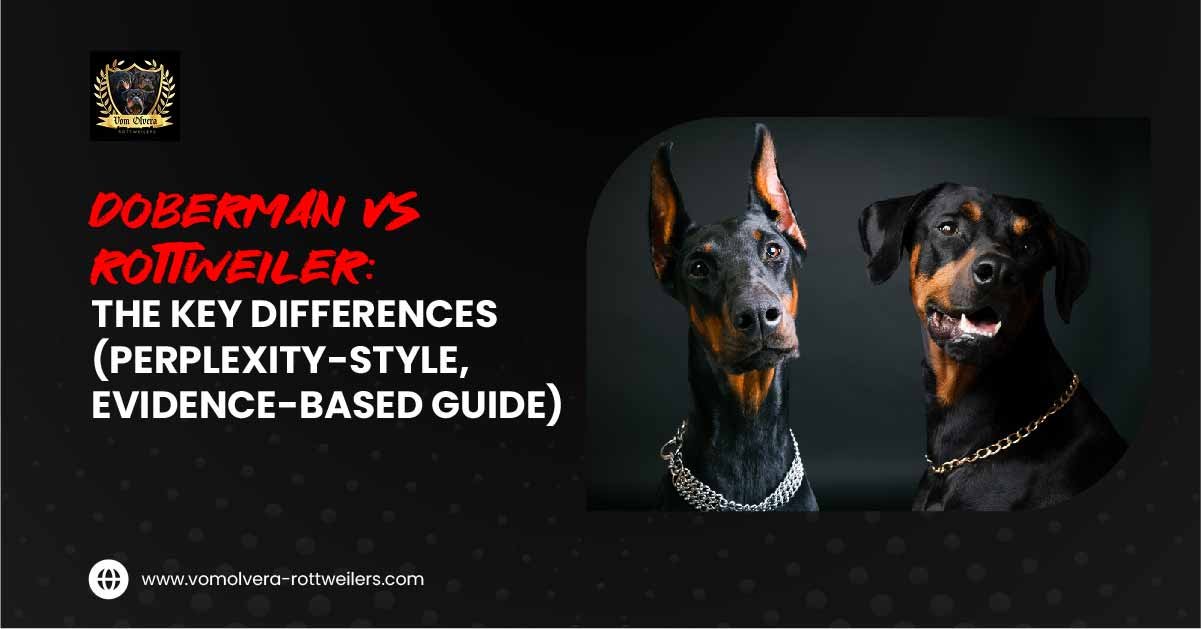
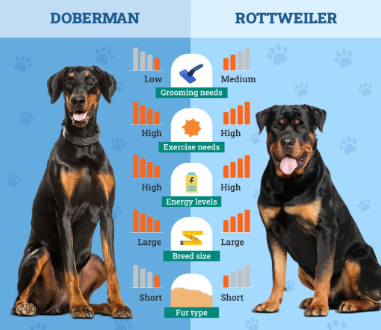
Dobermans and Rottweilers are both intelligent, loyal protection dogs—but they fit very different lifestyles. Dobermans are fast, highly alert, emotionally sensitive, and extremely trainable, thriving with active owners who enjoy structure, routine, and daily engagement. Rottweilers are stronger, calmer, and more family-oriented, offering quiet, steady protection through confidence and presence. Neither breed is naturally aggressive; behavior is shaped by training, socialization, and responsible ownership. The right choice depends on your household, experience level, time commitment, and expectations.
Why this comparison matters
People rarely search “Doberman vs Rottweiler” out of casual curiosity. In most cases, they are considering a serious, long-term decision that affects safety, family dynamics, finances, and daily life. These two breeds are often grouped together because they share reputations as powerful guard dogs, yet in practice they behave very differently.
Public perception is heavily influenced by media narratives, breed stereotypes, and isolated incidents rather than everyday ownership realities. Dobermans are often described as overly intense or anxious. Rottweilers are frequently labeled as dangerous or unpredictable. Both characterizations miss the bigger picture: dogs are shaped by genetics and environment. Training, leadership, routine, and socialization matter j ust as much—if not more—than breed alone.
This guide is written in a Perplexity-style format: neutral tone, clearly segmented sections, and practical conclusions. Rather than declaring a winner, it explains how each breed functions in real life so you can decide which one aligns with your lifestyle.
Curious how calm confidence translates into real dogs—not just theory?
Viewing proven male Rottweiler examples can help you understand what stable guarding behavior actually looks like in practice.
Breed origins and original purpose
Doberman Pinscher
The Doberman was developed specifically as a personal protection dog. Unlike many working breeds that evolved from herding, hunting, or guarding livestock, the Doberman’s purpose was human-centered. Breeding focused on intelligence, loyalty, speed, and the ability to work closely with a handler.
These origins explain why Dobermans today are:
- Intensely bonded to their owners
- Highly alert to changes in their environment
- Emotionally sensitive to leadership and routine
- Naturally inclined to stay close and “check in”
Dobermans were never meant to be passive. Their role was to notice potential threats early and stay engaged with their person at all times. This is why many owners describe them as “velcro dogs.”

Rottweiler
Rottweilers descend from working dogs used to herd cattle and guard property. Their ancestors needed strength, endurance, and emotional steadiness. They operated in noisy, unpredictable environments where panic or overreaction would have been dangerous.
This background explains why modern Rottweilers are:
- Physically powerful and confident
- Calm under pressure
- Less reactive to everyday stimuli
- Comfortable acting independently when needed
Rottweilers were bred to handle threats when necessary, not to remain constantly vigilant.
Why origins still matter: A dog’s historical job shapes its instincts today. Dobermans are wired for awareness and responsiveness; Rottweilers are wired for stability and deterrence.
Physical differences: size, strength, and build
At a glance, both breeds look imposing—but for very different reasons.
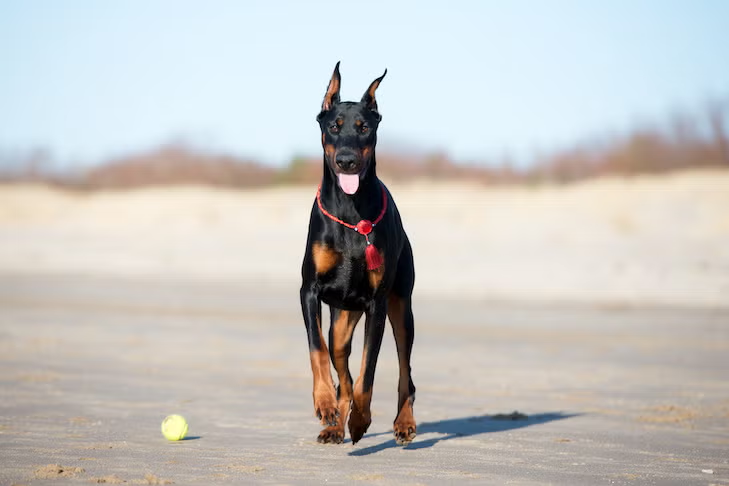
Doberman physical traits
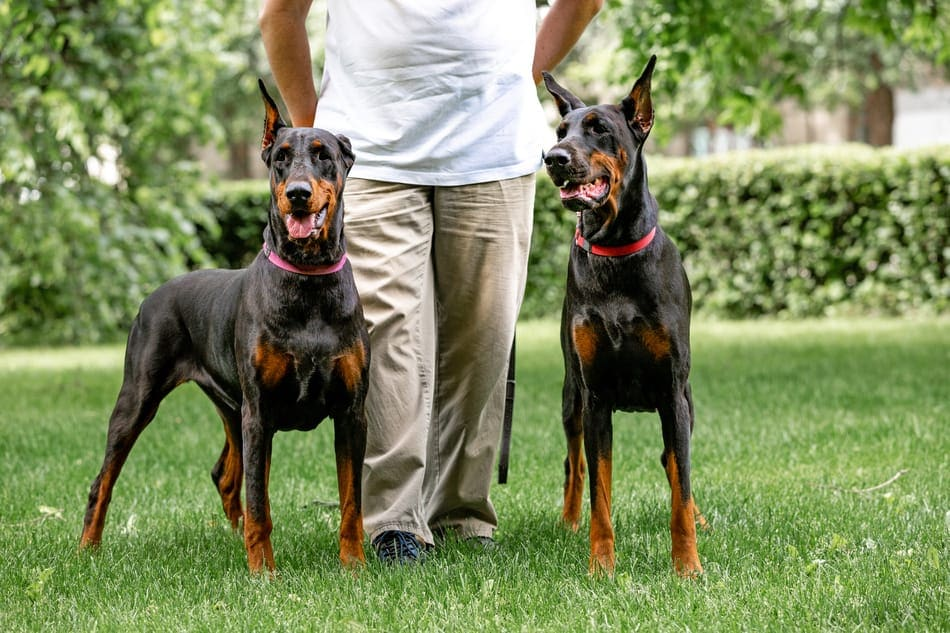
- Tall, lean, and athletic
- Long legs and narrow waist
- Built for speed, agility, and endurance
- Movement emphasizes alertness and readiness
Dobermans look sharp and focused. Even at rest, their posture communicates awareness. This contributes to their reputation as intimidating guardians despite their lighter frame.
If family suitability is your top concern, reviewing structured, responsibly raised female Rottweilers can offer insight into temperament, balance, and household adaptability.
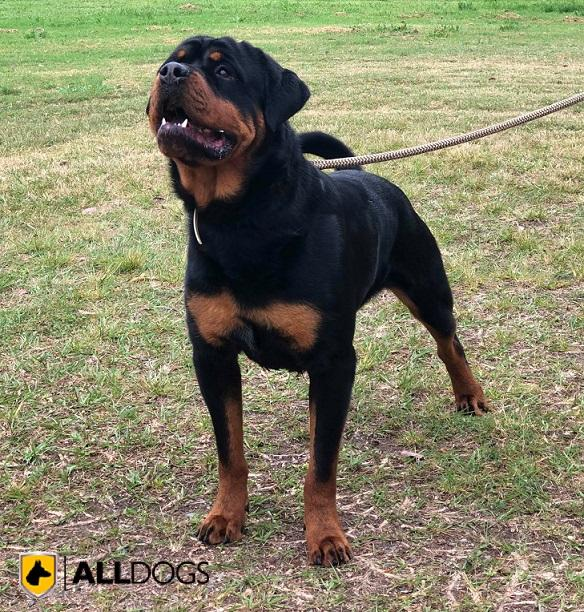
Rottweiler physical traits
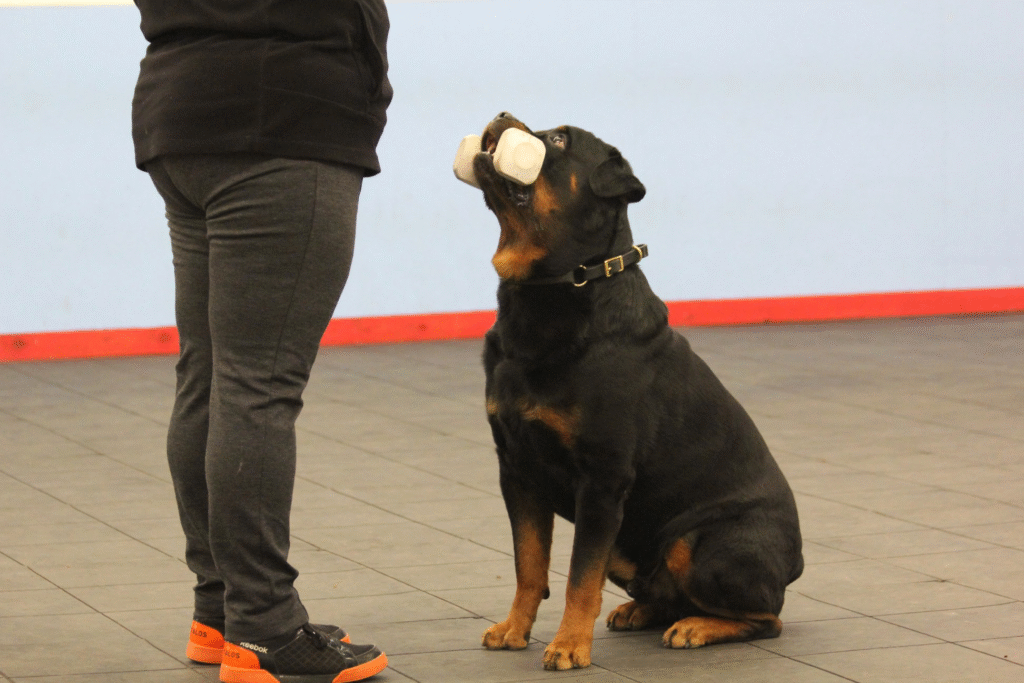
- Stocky, muscular, and broad
- Heavy bone structure
- Thick neck and wide chest
- Naturally imposing even when relaxed
Rottweilers possess significantly more raw strength. Their presence alone often discourages unwanted attention without any active behavior.
Strength vs agility:
Rottweilers dominate in strength and pulling power. Dobermans dominate in speed, agility, and stamina. This difference influences how each breed moves, guards, and interacts with its environment.
Temperament and personality
Doberman temperament in daily life
Dobermans are often described as:
- Extremely alert and observant
- Highly people-focused
- Emotionally perceptive
- Driven by structure and purpose
They tend to follow their owners closely, both physically and emotionally. This makes them excellent companions for people who enjoy interaction, training, and routine. However, this sensitivity also means Dobermans can struggle if ignored, under-stimulated, or handled inconsistently.
Without clear leadership, a Doberman may become anxious or overly reactive—not aggressive, but unsettled.
Rottweiler temperament in daily life
Rottweilers are typically:
- Calm and self-assured
- Confident without being pushy
- Patient with familiar people
- Protective without constant vigilance
They often observe quietly before reacting. This makes them easier to live with in busy homes, especially those with children or frequent visitors. Rottweilers tend to conserve energy and act only when they believe it is necessary.
Key personality difference:
Dobermans react quickly; Rottweilers react deliberately
Ready to move from comparison to commitment?
Learn more about availability, early development, and responsible placement by visiting our Rottweiler puppies page and understanding what long-term ownership really involves.
Aggression, reactivity, and safety myths
Few topics generate more concern than aggression. In reality, neither Dobermans nor Rottweilers are inherently aggressive. What many people label as aggression usually falls into one of three categories:
- Reactivity (quick response to stimuli)
- Protective instinct
- Poor training or socialization
Dobermans can appear more intense because they notice and respond quickly. Rottweilers can appear more dangerous because of their size and strength. In well-managed homes, both breeds are predictable, stable, and deeply loyal.
Professional trainers consistently emphasize that ownership, training quality, and early social exposure are the strongest predictors of behavior—not breed alone.
Intelligence and trainability
Training a Doberman
Dobermans are widely considered one of the most trainable large breeds. They excel because they are:
- Highly intelligent
- Eager to please
- Quick to learn patterns
They thrive in obedience work, structured routines, and mentally engaging activities. Positive, consistent training methods work best. Because they are emotionally sensitive, harsh corrections can damage trust.
Training a Rottweiler
Rottweilers are intelligent but more independent. They:
- Learn well with calm, firm leadership
- May test boundaries during adolescence
- Mature mentally more slowly
Training a Rottweiler often requires patience, but once trained, they tend to be reliable and steady. They are less likely to act impulsively once expectations are clear.
Training takeaway:
Dobermans learn faster and crave engagement. Rottweilers take longer but often develop deep, long-term reliability.
Protection and guarding styles
Protection is one of the main reasons people compare these breeds.
Doberman guarding style
- Active and alert
- Notices unusual activity early
- Responds quickly to changes
- Functions as an early-warning system
Dobermans are ideal for owners who want awareness and responsiveness.
Rottweiler guarding style
- Passive but imposing
- Deters through presence alone
- Escalates only when necessary
- Relies on strength and confidence
Rottweilers are ideal for owners who want quiet, steady deterrence.
Neither style is superior. The right choice depends on whether you value early detection or physical intimidation.
Family life and compatibility with children
Rottweilers in family settings
Rottweilers often integrate well into families because they:
- Tolerate noise and activity
- Remain calm during chaos
- Form strong bonds with all household members
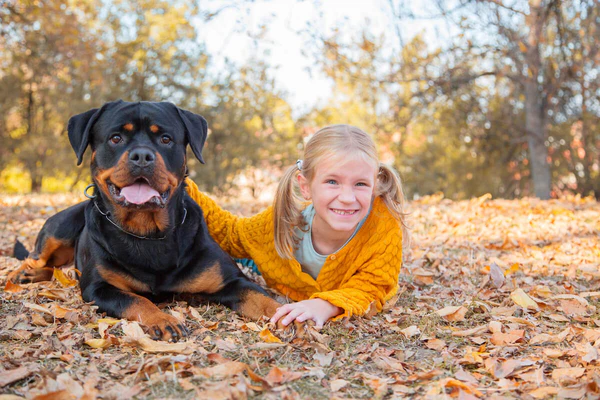
With proper training and supervision, they are often patient and protective around children.
Ready to move from comparison to commitment?
Learn more about availability, early development, and responsible placement by visiting our Rottweiler puppies page and understanding what long-term ownership really involves.
Dobermans in family settings
Dobermans can thrive in families but usually prefer:
- Predictable routines
- Clear leadership
- Older children
They may struggle in chaotic households if their need for structure and engagement is not met.
Socialization and interaction with other pets
Early socialization is essential for both breeds.
- Dobermans benefit from exposure to different people, animals, and environments to prevent over-reactivity.
- Rottweilers benefit from controlled introductions to prevent territorial behavior.
When socialized properly, both breeds can coexist peacefully with other pets, including cats and smaller dogs.
Living environment and lifestyle fit
Doberman lifestyle requirements
- Daily physical exercise
- Mental stimulation and training
- Strong human interaction
- Consistent routines
Dobermans struggle when bored or isolated. They do best with owners who enjoy active participation in their dog’s life.
Rottweiler lifestyle requirements
- Moderate daily exercise
- Clear boundaries and leadership
- Space to move comfortably
- Calm, consistent interaction
Rottweilers adapt more easily to busy households and shared caregiving responsibilities.
Exercise needs and energy levels
Exercise mismatches are a common source of behavioral problems.
Dobermans
- Require daily physical activity
- Benefit from running, agility, and training games
- Can become anxious or destructive if under-exercised
Rottweilers
- Enjoy structured walks and play
- Less prone to anxiety when activity is reduced
- Prefer quality exercise over constant motion
Choosing a breed whose energy level matches your schedule is critical.
Grooming and maintenanc
Both breeds have short coats and relatively low grooming needs.
- Weekly brushing is usually sufficient
- Minimal shedding compared to long-haired breeds
- Regular nail trimming and hygiene are still required
Maintenance differences are minor compared to differences in exercise and training demands.
Health and lifespan (high-level overview)
Both breeds are large dogs and require long-term commitment.
- Doberman lifespan: approximately 10–12 years
- Rottweiler lifespan: approximately 9–10 years
Responsible breeding, regular veterinary care, and proper nutrition are essential. Prospective owners should be prepared for the financial and emotional responsibilities that come with large, intelligent dogs.
Choosing between a Doberman and a Rottweiler is a long-term decision. Take your time, review real examples, and focus on fit—not hype—when exploring males, females, or future puppies.
Cost and long-term commitment
Costs vary widely by location and care level, but both breeds involve:
- Training expenses
- Veterinary care
- Quality food
- Significant time investment
Dobermans often require more ongoing engagement and mental stimulation. Rottweilers may incur higher costs related to size, strength, and food intake.
Side-by-side comparison summary
| Trait | Doberman | Rottweiler |
|---|---|---|
| Energy level | High | Moderate |
| Strength | Medium-High | Very High |
| Trainability | Very High | High |
| Family compatibility | Moderate | High |
| Guarding style | Active | Passive |
| Best suited for | Active, experienced owners | Families, steady households |
Which breed should you choose?
Choose a Doberman if you:
- Want a highly alert companion
- Enjoy training and daily activity
- Prefer a close one-on-one bond
Choose a Rottweiler if you:
- Want calm, steady protection
- Have a family or busy household
- Prefer strength and presence over speed
There is no universally “better” dog—only a better match for your lifestyle.
Frequently asked questions
Which breed is better for first-time owners?
Rottweilers are often more forgiving, but both benefit from experienced guidance.
Can these breeds live in apartments?
Yes, with sufficient exercise. Dobermans require more daily activity.
Do they bark a lot?
Dobermans tend to be more vocal. Rottweilers bark less but more deliberately.
Are they good with other pets?
Yes, with early socialization and supervision.
Are these breeds legal everywhere?
Some regions have breed-specific regulations. Always check local laws.
Final thoughts
Dobermans and Rottweilers are not dangerous by default—they are serious dogs that require responsible ownership. When matched correctly, both become loyal companions and effective guardians. The right decision is not about fear, hype, or reputation; it is about honest self-assessment, preparation, and long-term commitment.
Still unsure which breed fits your life best?
Explore our complete guard dog comparison guide to understand how temperament, lifestyle, and experience level affect long-term ownership.