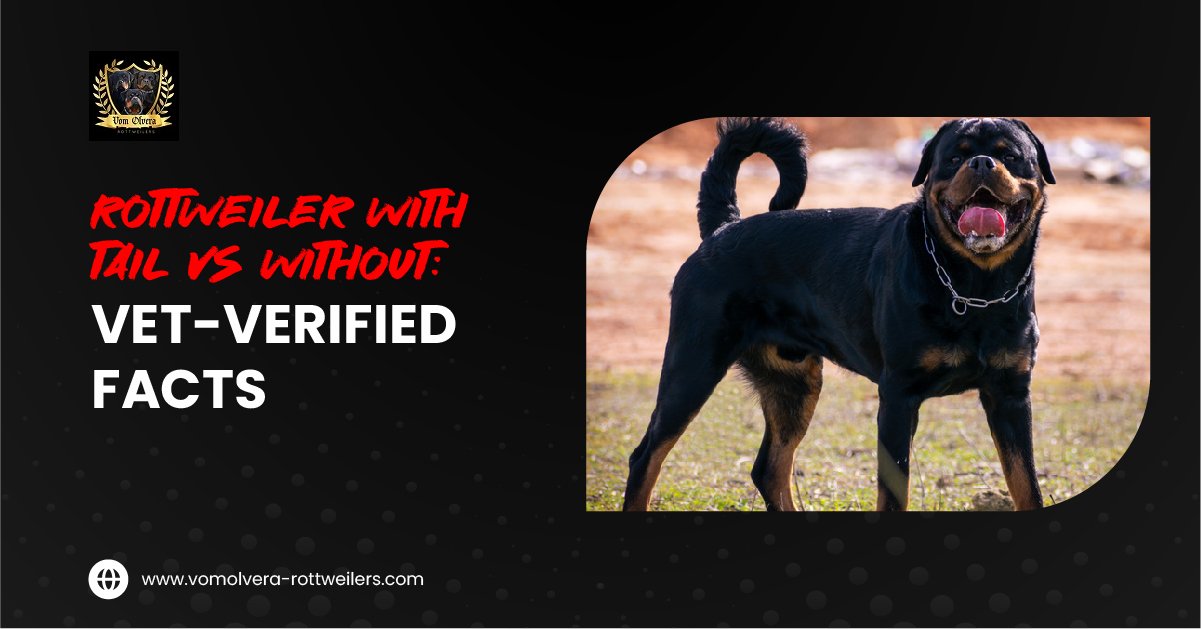
The issue of whether a Rottweiler ought to be docked or have an extended one has been contentious among the breeders, veterinarians, and dog owners over the decades. The Rottweilers were traditionally viewed with no tails; thus, some individuals consider docking to be part and parcel of Rottweilers. Nevertheless, veterinary advice and revised breed no longer place this view as its main consideration. By having an insight into why dogs should be tail docked, the medical consequences, and the position of kennel clubs, owners will be able to make informed and responsible choices.
Why Were Rottweiler Tails Traditionally Docked?
Rottweilers were historically working dogs and they were employed to herd livestock and pull carts. The docking of the tail was believed to decrease the chances of getting injured when working around carts, wagons or heavy equipment. A long tail might get caught or even injured in such settings.
Tail docking continued to vary over time as more companies employed it as a means of nonfunctional adornment. The show dogs became the best breed to have docked tails as the standards of the kennel clubs developed. Many breeders were driven to continue the practice despite the fact that Rottweilers have lost the working status and become family companions.
View our current Rottweiler puppies raised with a focus on health, temperament, and correct breed structure.
Common Modern Reasons for Tail Docking
Today, tail docking is no longer done because it is needed, but it is done because it looks fashionable. It is the opinion of some owners that a docked tail helps in the classic Rottweiler look, whereas others say that it helps decrease tail damage in energetic dogs. Another misconception is that docking enhances agility or performance; this has not been proven by veterinary research.
It should be mentioned that these arguments are mostly preference-oriented and are not confirmed by regular scientific discoveries.
To better understand how working roles shaped modern dog breeds, explore the history of the German Shepherd and how function once influenced physical standards.
What Do Veterinarians Say About Tail Docking?
The majority of veterinary associations are against tail docking when it is not necessitated by a medical reason. Puppies are also born with complete working nervous systems and this implies that they can feel pain. Docking is usually conducted when the puppies are a few days old, and it does not rule out pain and distress.
Additionally, complications can occur, including infection, improper healing, and the development of chronic neuromas, painful nerve endings that may persist throughout the dog’s life. Because of these risks, many veterinarians advocate leaving tails intact unless docking is medically required.
How Does a Tail Affect Communication?
The tail of a dog is very instrumental in communication. Rottweilers express their emotions through tails to show excitement, caution, submission or confidence. Cutting the tail may reduce the capability of a dog to communicate intentions well to other dogs and humans, and hence result in misinterpretation or behavioral difficulties.
The behavioral point of view is that natural tail does provide more full body language and socialization.
What Do Kennel Clubs and Breed Standards Say?
Over several years, kennel club standards have placed a lot of emphasis on docked tails, which has solidified the perception that docking was helpful in compliance with the breeds. However, this has changed. In the latest revisions, the American Kennel Club modified the Rottweiler breed standard to permit both docked and natural tails, with an emphasis on appropriate tail set instead of tail size. This change is also an indicator of an increase in the awareness of the fact that Rottweilers can be excellent representatives of breed standards with their tails intact.
Is Tail Docking Legal?
Dog tail docking is based on the country. Tail docking is legal, yet becoming more and more discouraged by veterinary practitioners in the United States. Most countries, such as the UK, much of Europe, Australia and New Zealand, have, on the contrary, outlawed tail docking unless a particular medical or working exception is applied.
Before they decide to patronize the breeders who dock tails on a regular basis, potential owners ought to verify local laws and take into account the question of ethics.
Should a Rottweiler Have a Tail?
A Rottweiler should have its natural tail since it is of great benefit both to the veterinary and welfare considerations. There is no proven health or performance benefit of docking and a functional component of the anatomy of the dog is removed. Although there are some infrequent medical cases that might require tail docking, there is a general agreement that cosmetic docking is unnecessary.
Emerging responsible breeding trends prefer not to alter their tails and this is in line with the current canine welfare standards.
Final Thoughts
Regardless of whether they have a docked tail or a natural one, Rottweilers are powerful, loyal and intelligent species of dogs. Nevertheless, it has been found that tail docking is now considered by veterinary opinions and breed standards to be more of a cosmetic practice, potentially risky, but with no clear advantages. At Vomolvera-Rottweilers, understanding breed history alongside modern science is essential to promoting responsible ownership and the long-term well-being of the Rottweiler breed.